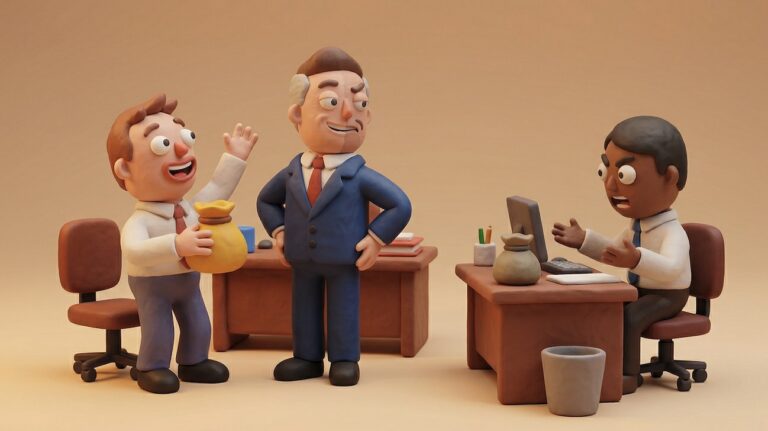
The Work Style Your Boss Likes (The D-2 Rule) — Are You the Kind of Employee Bosses Like?
The truth is, just as people are all different, bosses are all different too. But there is a work style that can make most bosses think, “This person gets things done,” or “This person has a good sense of what to do.”
When most of us receive an assignment, we feel pressure to produce something polished, perfect, and excellent.
But unless you’re a manager-level employee with a lot of experience, that’s not really what’s expected. In reality, the task is often assigned even though everyone knows only about 70% of it can be done well right away. That doesn’t mean your boss sees you as incompetent. It just means that, as a rule, the support expected from a subordinate is around that level. Especially for employees from staff level to assistant manager level, expecting a flawless result is really just the boss’s wishful thinking.
So what should you do?
You need to make it possible for your boss to report your work to their own boss and get approval.
Our bosses are also someone’s subordinates, so they’re often in a similar position. They, too, have to submit work on time and make sure it’s good enough not to get scolded.
That’s why, whenever you first receive an assignment, you should always confirm, “When would you like this by?” Most bosses just say, “Take care of this,” and then get busy with other work, lose track of progress, and only when the deadline gets close do they say, “Why isn’t this done yet? I asked for it ages ago!”
For example, if you ask, “When would you like this by?” and it’s Monday, and your boss says they need it by Friday, most employees think, “Okay, I’ve got all week, so I’ll handle the urgent stuff first and start around Wednesday.” That’s where the difference appears. This is where people get split between those who are always seen as good at their jobs and those who, no matter how hard they work, never seem to get that reputation. (It’s unfair, but still.)
Because bosses are human, they can’t manage schedules with machine-like precision. If you ever meet a boss who really manages schedules down to the day, that’s a blessing from a work standpoint. But most of the time, when an employee asks about the deadline, the boss answers roughly. Why? Because they don’t know exactly either. Then, the moment their own boss says, “Isn’t it done yet?” everything blows up.
Even though they gave you a clear due date, the blame comes all the way down because you still haven’t done it and they ask what you were doing.
So if you’re told to report by Friday, you should submit a draft by Thursday morning at the latest, and ideally during the workday on Wednesday. In other words, report it two days before the D-day you were given.
There’s a reason I say “draft.” Most employees try to submit a “final version,” and once they report on time, they relax and think, “I’m done.” But they overlook the fact that the content may still need revision. The truth is, the odds that your boss will like the material the first time are extremely low. It’s not a matter of “I already handed it in, so that’s that.” Most of the time, the issue isn’t the content itself; it’s the boss’s taste.
If you report a draft two days early, your boss will think, “This person is quicker than the others,” and they’ll have the room to actually read it. Bosses are human too, so they need space before they can really think things through.
When a boss receives a draft with that much breathing room, they can review it properly, point out revisions without rushing, and reflect their own preferences. Over those two days, the final version takes shape through one or two rounds of revisions that match the boss’s taste.
With the finished material in hand, the boss can then report to their own boss. Because they’ve already added their own input and understood the content thoroughly, the report will go smoothly.
A boss doesn’t look at an employee’s report and instantly decide whether it was good or bad. They judge it after they’ve reported it to their own boss and things have wrapped up without problems, thinking, “This was well made.”
And even if the result wasn’t great, since they personally reflected their own preferences and made revisions, they can’t fully pin 100% of the blame on the subordinate.
To be honest, this method isn’t easy. In the middle of an already busy workday, managing your own schedule in a way that even your boss can’t do, and bringing things forward by two full days, may already mean you’re at a pretty advanced level of work skill.
Even if you don’t follow this exactly, just understanding how your work moves along, how it gets processed, and at what point it gets evaluated will help a lot.
One final note, half joking and half serious: even if you’re so capable that you can draft something three or four days early, or even in just one day, please try to hold back a little. As everyone knows, once you show ability that goes far beyond expectations, the bad luck begins: you end up doing other people’s work too. (From the boss’s perspective, if a reply comes back too quickly, it can feel burdensome, or they may put it off because there’s plenty of time and then forget entirely — which creates its own absurd situation.)
For anyone tired of getting the short end at work
I aim to publish one essay a week, with an honest look at workplace problems and practical ways to respond. Get each new story by email.
Free. Confirm your email, then keep only the English series selected on the language selection screen. Unsubscribe at any time.
Browse all workplace stories© 2026 Hoseo Lee. All rights reserved. Unauthorized reproduction and use for AI training are prohibited.