Why Is a Company So Cruel and Cold? — Why Small Businesses Can’t Help But Feel Distant to Employees

A company can be astonishingly cruel and cold when it comes to dealing with individual employees. It’s a place where people pour in more hours than they do with their own families, yet the rewards are often meager and there’s little in the way of comfort or encouragement.
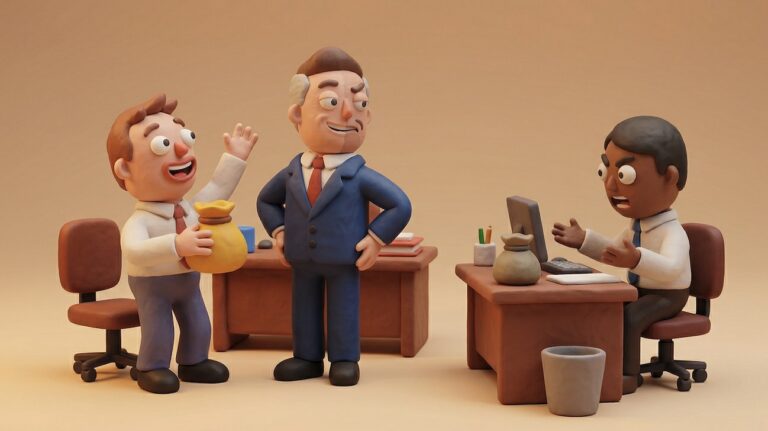
Why is a company so cold? Management complains about employees’ complacency and weak performance, while employees feel they’re being treated like machine parts, like consumables, and end up hurt and disappointed. Even though both sides use the word “family” inside the same building, the reality is that they’re living in completely different worlds.
An ideal company is one where the organization and the individual grow together. Everyone dreams of that, but in reality it’s not easy to find. Especially in small and mid-sized companies, it’s about as likely as running into a unicorn.
In the end, this gap exists because each side has a different reason for existing.
For small businesses, it all comes down to **survival**. If a company had short-, medium-, and long-term business goals like a large corporation, along with the organization and funding to sustain that flow, the story would be different. But most small businesses don’t have any of that. In many cases, they don’t even have a business plan.
A corporation founded with the owner’s capital or a small round of investment immediately faces cash pressure and runs with one goal only: revenue. Rather than a “company” in the usual sense, it’s closer to a group that can survive only by selling products and services and turning a profit.
I’ve seen more times than I can count companies that stayed healthy for 10 or 20 years suddenly collapse, unable even to pay employee wages, leaving everyone scattered in different directions. When cash pressure hits, small businesses that can’t raise outside investment turn to lenders. And once sales slow down or losses begin, the finance contact who used to greet you with a smile becomes the grim reaper in an instant.
People in accounting or management may feel this reality in their bones, but employees in sales, engineering, production, quality control, and other roles have no way of knowing it.
A school-life comparison makes it easier to understand.
Students usually don’t worry about a household’s income and expenses. They think that if they study hard and follow their parents’ advice, everything will be fine. But no matter how hard I study, if the family’s main breadwinner loses their job, the household economy can collapse, and everything becomes a matter of survival. A company is the same. No matter how hard employees work, management is carrying a completely different weight.
There’s also a reason management keeps these things from employees. They’re afraid that if people find out, resignations will pour in.
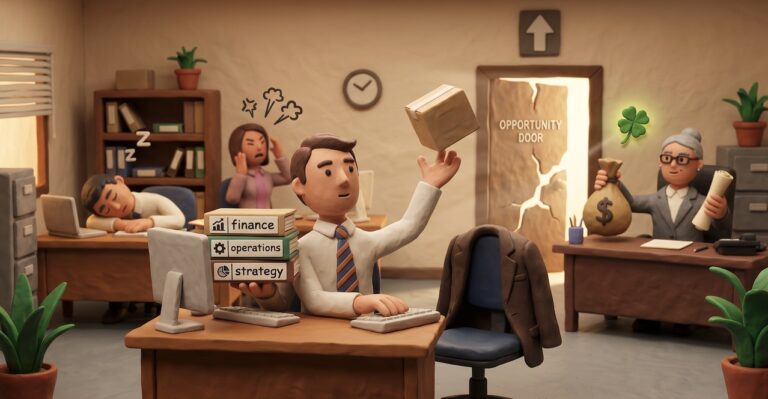
So when employees make perfectly reasonable requests — higher pay, better working conditions, career training — small businesses are already locked into a single word: survival. They end up thinking, “Do we really need to go that far? The company isn’t exactly in great shape.” That mindset runs deep not only among executives but also throughout administrative departments, and some even treat it as a virtue.
From the employee’s point of view, they’ve only made a legitimate request, only to run straight into a coldness sharper than the dead of winter.
As an HR manager, it’s a painfully difficult position.
You can see good talent right in front of you, and you know the organization could become stronger through proper development and fair compensation. You can also see ways to keep an ace employee from leaving. But once you look at the company’s situation, there simply isn’t room for that right now. And because you’re in a position where you can’t even fully explain those circumstances to employees, frustration becomes a constant companion.
On the surface, it looks like a community, but in reality it’s every person for themselves. In a structure like this, the employees who thought of the company as their home feel the deepest sense of emptiness.
So what are we supposed to do?
Before becoming hurt and powerless over the company’s coldness, we first need to accept this ecosystem for what it is. Instead of endlessly hoping to be understood and gradually letting go of those expectations, it’s less painful to use that energy to raise your own value.
After all, we’re still at this company, drawing a paycheck and getting by, for better or worse. Focus on getting through today, but at the same time, prepare for tomorrow.
Build your skills, broaden your scope of work, add line by line to your résumé, or hold on until you’ve put in enough years and then move on to a better home. Waiting for the company to do something for you is much slower than moving for yourself.
For anyone tired of getting the short end at work
I aim to publish one essay a week, with an honest look at workplace problems and practical ways to respond. Get each new story by email.
Free. Confirm your email, then keep only the English series selected on the language selection screen. Unsubscribe at any time.
Browse all workplace stories© 2026 Hoseo Lee. All rights reserved. Unauthorized reproduction and use for AI training are prohibited.